

By: Ramzi Ibrahim, FCIPS
www.procumart.com
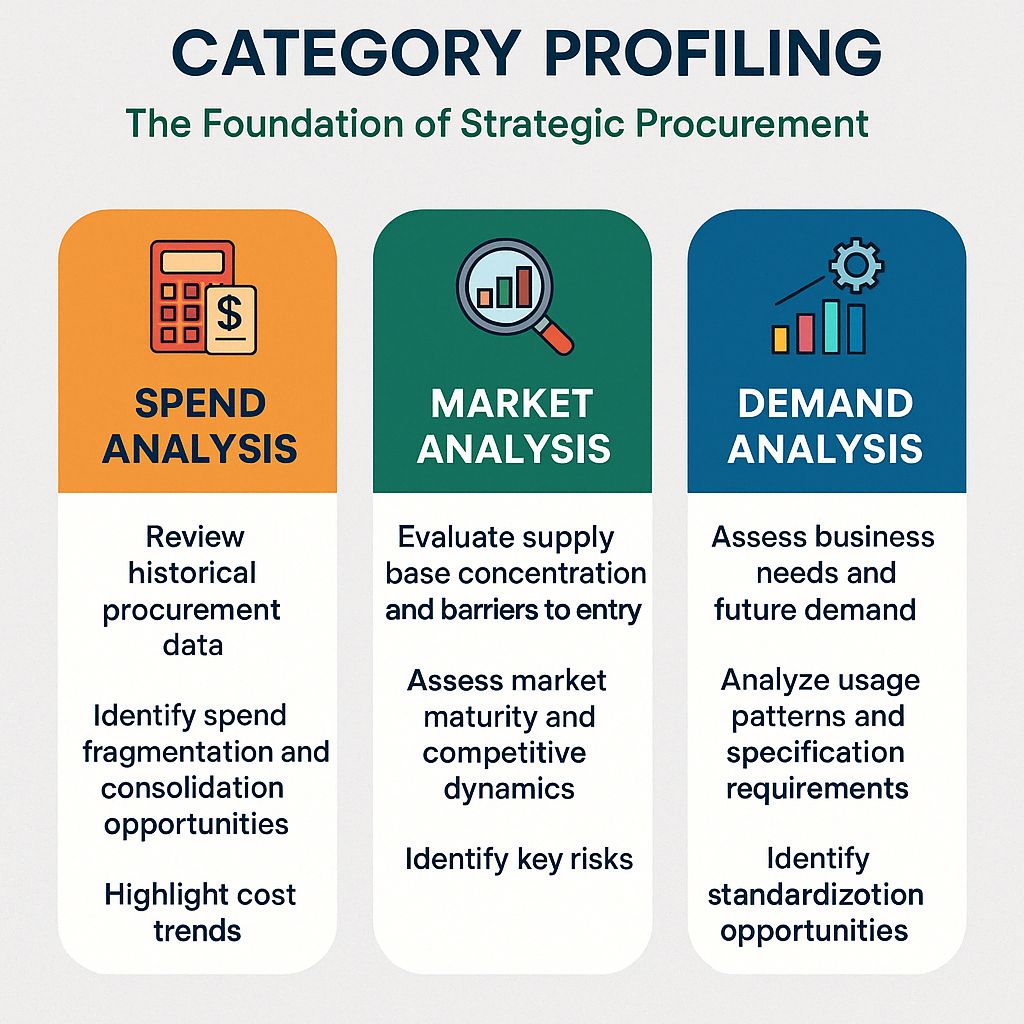
The first and arguably most critical step in successful category management is profiling your category. Before jumping into strategy formulation or market engagement, it’s essential to build a detailed understanding of the category’s internal dynamics and external environment. This is achieved through a combination of spend analysis, market analysis, and demand analysis—each providing a unique lens into the category’s strategic importance and opportunities.
1. Spend Analysis
This involves reviewing historical procurement data to understand what is being bought, from whom, how much is being spent, and how often. Through this lens, you can identify fragmentation in spend, opportunities for consolidation, and potential compliance issues with existing procurement policies. It also highlights cost trends, helping you to prioritize high-value or high-risk areas within the category.
2. Market Analysis
Understanding the external supply market is crucial. This includes evaluating supply base concentration, barriers to entry, market maturity, competitive dynamics, and key risks (e.g., geopolitical, economic, technological). A robust market analysis allows you to assess supplier power, leverage sourcing opportunities, and mitigate external threats.
3. Demand Analysis
This is where internal stakeholder engagement becomes vital. Demand analysis assesses business needs, future demand projections, usage patterns, and specification requirements across departments. It often reveals opportunities to standardize specifications, challenge demand assumptions, or drive demand management initiatives—all critical for aligning procurement strategies with organizational goals.
⸻
In Conclusion
Category profiling is more than a data exercise; it’s a strategic enabler. By combining insights from spend, market, and demand analysis, procurement professionals can tailor category strategies that reduce cost, minimize risk, and deliver long-term value.
 Procumart: the Power of the Procurement